

FPC film key switches have high flexibility in process control capabilities and have gradually developed towards multi-layer composite structures in practical applications. By stacking multiple layers of functional film layers and circuit layers, signal transmission, touch feedback, lighting backlighting, shielding protection and other functions can be integrated, providing an integrated solution for industrial control systems of intelligent terminals and small electronic devices.
After adopting a multi-layer composite design, the FPC film key switch has significantly improved functional density, while reducing the number of external connectors and optimizing the overall wiring structure. The upper layer is usually printed facial mask and protective layer, the middle layer is circuit conduction layer, and the bottom layer is FPC line layer or PET support layer. If necessary, special materials such as isolation layer, EMI shielding layer, silicone gasket, etc. are added.
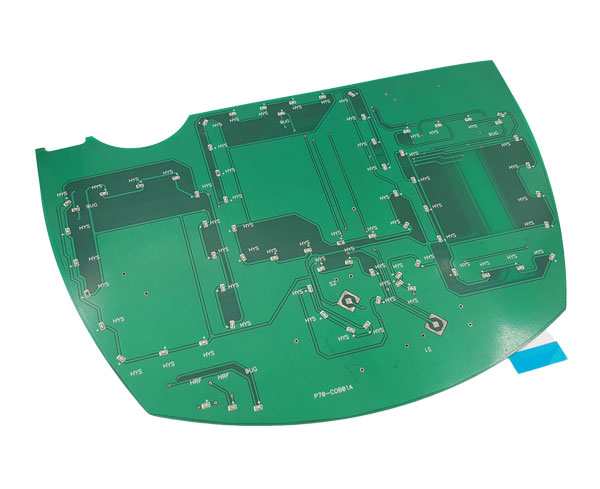
This type of structure is suitable for scenarios with high requirements for functional integration, lightweight, and reliability. During the research and development process, it is necessary to control interlayer adhesion, consistency of conductive points, resistance matching, and thermal expansion and contraction coefficients. Multi layer FPC film key switches often use processes such as silver paste circuits, laser drilling, and hot pressing to ensure long-term stability and electrical performance.
Multi layer structures have scalability and customization, providing feasible solutions for emerging fields such as medical electronics, automotive instruments, and human-computer interaction panels, and are becoming an important development direction for flexible control components.
Address:Room 601, Building 9, No. 180, Maozhushan Road, Changping Town, Dongguan City, Guangdong Province, C
Domain:meitong17.com
E-mail:zhangjianfei@dgkdmembrane.com